
Surface Roughness
There are many things to explore when choosing among manufacturing processes for your metal product(s). The chart below provides surface roughness values produced by common processing methods and is intended to be used as a general guideline. The ability of a processing operation to produce a specific surface roughness depends on many factors. For example, in surface grinding, the final surface depends on the peripheral speed of the wheel, the speed of the traverse, the rate of feed, the grit size, bonding material and state of dress of the wheel, the amount and type of lubrication at the point of cutting, and the mechanical properties of the workpiece being ground. A small change in any of the above factors can have an impact on the final surface that is produced.
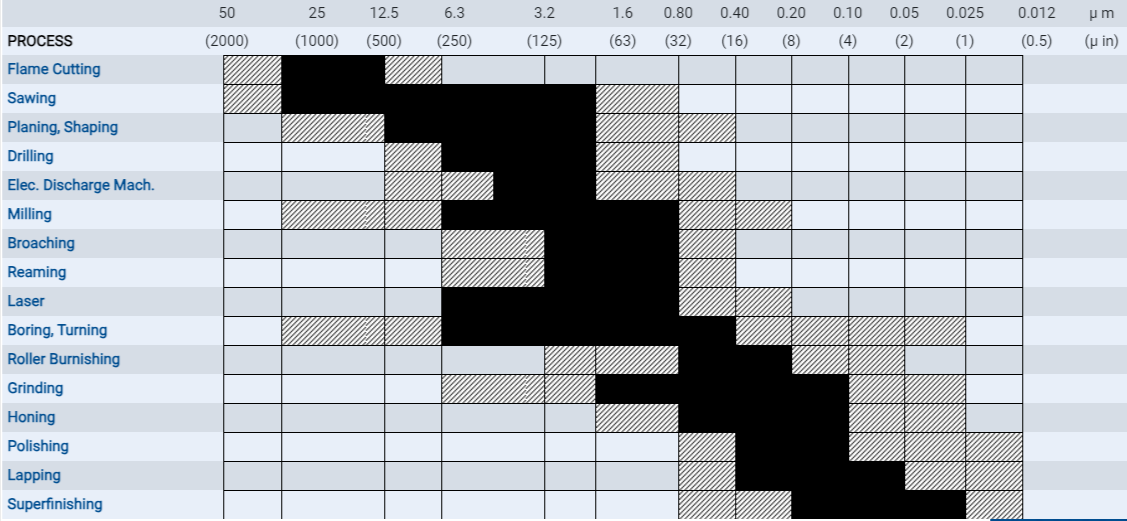
KEY:
| Less Frequent Application = | |
| Average Application = |
The ranges shown above are typical of the process listed. Higher or lower values may be obtained under special conditions.